
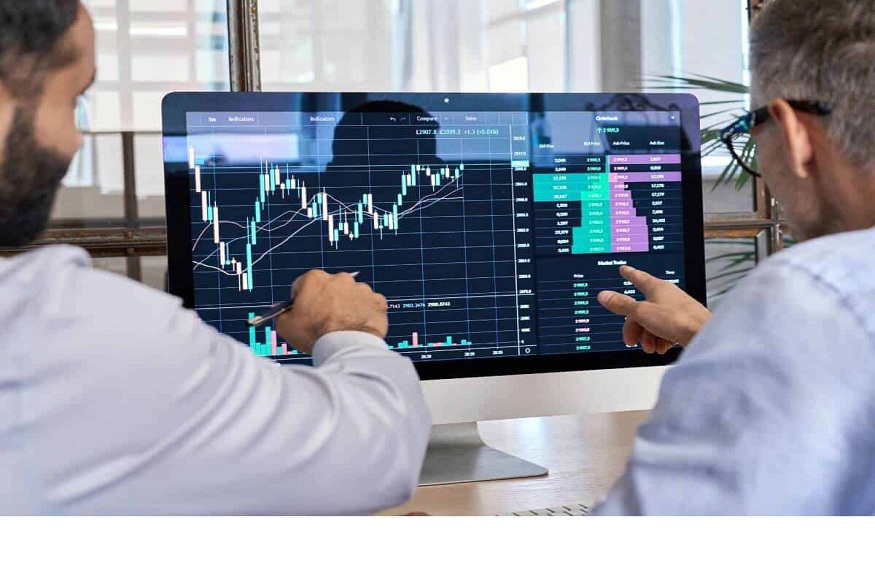
A trading platform can look impressive on screen, but active traders quickly discover that successful execution involves much more than charts, indicators and a convenient order button. When positions are opened and closed frequently, the conditions surrounding each transaction can have a meaningful effect on strategy performance.
The difference between an intended entry and the actual fill, the cost of the spread, available order types and the way positions behave during volatile markets can all influence results. A strategy that appears profitable when tested against historical prices may perform differently once real execution costs are introduced.
For active strategies, therefore, evaluating the trading environment is just as important as evaluating the platform itself.
Spread Is Part of the Strategy’s Cost
The spread is one of the most immediate trading costs because it affects a position as soon as it is opened. A trader buying at the ask and potentially selling at the bid needs the market to move sufficiently to overcome that difference.
Its importance varies between strategies. A position intended to remain open for weeks may be relatively insensitive to a small change in spread, while a strategy targeting modest intraday movements can be considerably more affected.
Spreads can also change as liquidity and volatility change. During major economic announcements or periods of reduced market liquidity, trading conditions may become less predictable.
Read More: he Features That Quietly Improve the MT5 Experience
For this reason, traders should avoid evaluating a strategy using only an assumed fixed transaction cost. Testing different spread environments can provide a more realistic picture of how robust the approach may be.
Order Types Give Strategies More Control
Execution conditions are also shaped by the types of orders available. A market order prioritises immediate execution, while a limit or stop order allows the trader to define conditions under which an order should be triggered.
Working orders can be particularly useful for rules-based strategies. A breakout approach, for example, may require a position to open only after price moves beyond a predefined level. A pending order can formalise that condition rather than requiring the trader to react manually to every price movement.
Stop-loss and take-profit orders can similarly help translate a strategy’s risk parameters into practical instructions. This does not guarantee a particular outcome, especially during fast-moving markets, but it can make execution more consistent with predetermined rules.
Position Management Matters Too
Execution is not limited to opening a trade. How new orders interact with existing positions can also affect an active strategy.
A trader who is already long an instrument may want to reduce that exposure, establish a separate short position or completely reverse direction. The platform’s position-management rules can determine how the new order interacts with the existing trade.
This is particularly relevant to strategies that frequently scale positions, hedge exposure or switch direction. A trader who does not understand these mechanics could unintentionally create a different position from the one intended.
For this reason, reviewing the trading conditions offered by a trading broker should involve more than checking the available markets or looking at the platform interface. Order handling and position-management rules can be equally relevant to active strategies.
Platform Choice Should Match Strategy Requirements
Technology still matters, but the appropriate platform depends on the strategy rather than simply the number of features available.
For discretionary traders, intuitive charting and straightforward order management may be priorities. For systematic traders, automation, testing capabilities and flexible order handling can become more important.
Read More: What Is Forex Trading? Mexican Instructors Are Hearing This Question More
Platforms such as MetaTrader 4 and MetaTrader 5 are widely used by traders who want access to technical analysis and automated trading tools. A proprietary platform may offer a different combination of functionality and workflow.
However, additional features should not automatically be interpreted as better execution. Sophisticated software cannot compensate for unrealistic assumptions about transaction costs, weak risk management or a strategy that performs poorly outside historical conditions.
Volatility Changes the Execution Equation
One of the most important considerations for active strategies is that execution conditions are not static.
During calm markets, an order may behave close to expectations. During a sharp price movement, however, the available price can change rapidly. This can increase slippage and affect the eventual execution of market, stop or other orders.
Traders should therefore stress-test strategies against less favourable conditions rather than evaluating them only under ideal assumptions. This might involve modelling wider spreads, greater slippage and periods of unusually high volatility.
The objective is not to predict precisely what every trade will cost. Instead, it is to determine whether the strategy remains viable when real-world conditions become less favourable than the theoretical model suggests.
Making Execution Part of Strategy Design
Execution should be treated as part of strategy design rather than an afterthought. Entry signals, position sizing and exit rules determine what a trader intends to do, but execution conditions determine how those decisions become actual positions.
A strategy that looks compelling on a chart can behave very differently once spreads, slippage, order behaviour and volatile-market conditions are considered. Including these factors in testing can therefore provide a more realistic assessment of potential performance.
For active traders, choosing a platform is only one part of the process. Understanding how orders are submitted, triggered, filled and managed can provide a stronger foundation for evaluating a strategy.
The goal is not to eliminate uncertainty, which is impossible in financial markets, but to understand it. By incorporating execution costs, order mechanics and changing market conditions into strategy development, traders can build approaches based on realistic assumptions rather than theoretical ones.
About the Author