Not all Power of Attorney service providers in Dubai are the same. The right one saves you time, prevents document rejection, and protects your legal interests, while the wrong one can cost you far more than a simple fix and leave your affairs exposed at the worst possible moment.
Whether you need a POA in Dubai for property, business, or personal matters, the provider you choose determines how smoothly the process goes. This guide covers what to look for before you commit to a service provider.
Understand What a POA in Dubai Actually Involves
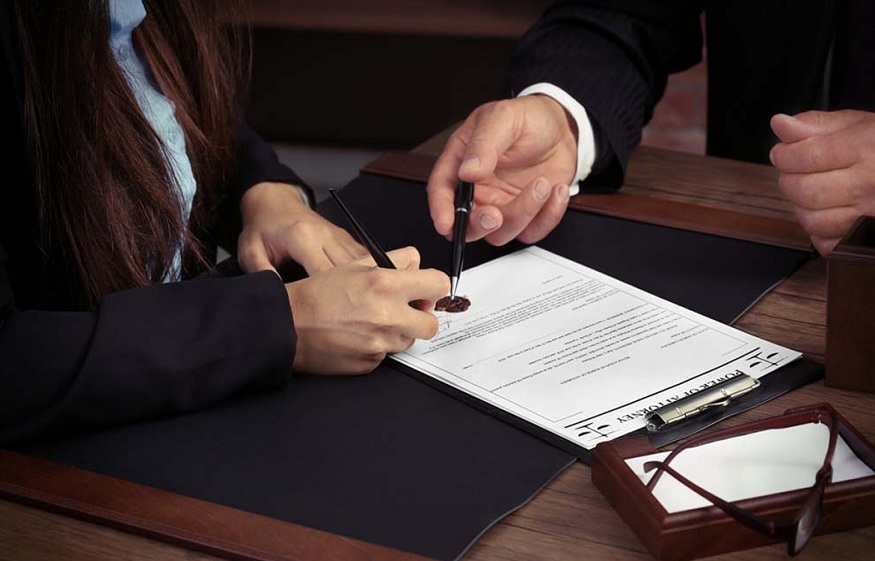
A Power of Attorney Dubai is a legally binding document. It authorises another person to act on your behalf in financial, legal, or property matters. Under UAE law, it must be drafted in Arabic or bilingual Arabic-English format, notarized by a UAE Notary Public, and comply with the UAE Civil Transactions Law (Federal Law No. 5 of 1985, as amended).
There are two main types: a General POA, which grants broad authority, and a Special POA, which limits authority to specific tasks. The type you need depends on your situation, and the right service provider will help you identify which applies.
Read More: Best Table Fan in 2026: Complete Buying Guide for Smart Cooling
5 Things to Check Before Choosing a POA Service Provider
1. They Offer Custom Drafting, Not Generic Templates
One of the biggest risks with low-cost providers is the use of standard templates. A template-based POA can include powers you never intended to grant or miss powers you actually need. Both are serious problems.
Look for a provider that drafts your POA in Dubai based on your specific requirements. They should ask questions about the scope, duration, and purpose before producing a single word.
2. They Handle Notarization Correctly
Your Power of Attorney in Dubai is not valid without notarization by a UAE Notary Public. Dubai Courts now offer remote e-notarization via a secure video call, which allows principals to notarize their POA from anywhere in the world.
A good service provider will manage the entire notarization process for you. This includes scheduling the video session, preparing the document, and arranging the one-time password (OTP) confirmation. If a provider skips or rushes this step, walk away.
3. They Know When Attestation Is Required
If your POA in Dubai is executed outside the UAE, it must be attested. The process requires notarization in your home country, authentication by the UAE Embassy or Consulate there, and final attestation by the UAE Ministry of Foreign Affairs (MOFA) upon arrival in the UAE.
Read More: Redefining Play: A Guide to Finding High-Performance Gaming Systems
A reliable provider understands these cross-border requirements. They will flag the attestation steps early and guide you through each one, rather than leaving you to figure it out after the document has been drafted.
4. They Are Familiar With UAE Authority Requirements
Different government bodies in the UAE have different expectations for a Power of Attorney. The Dubai Land Department (DLD) requires specific property details in property-related POAs. Banks are known to reject broad or outdated documents.
Choose a provider with experience across the authorities relevant to your matter. Whether that is the DLD, RTA, RERA, or a free zone authority, they should know what each body accepts and what it rejects.
5. They Are Transparent About Fees and Timelines
Legitimate POA service providers are upfront about costs. Standard notarization fees at Dubai Courts vary by document type. A bilingual POA, for example, carries a Dubai Courts notary fee and may attract translation fees on top.
Be cautious of providers who quote vague prices or keep adding charges after you have paid. Ask for a full breakdown before you start. Also, confirm the turnaround time. Reliable providers complete most POA processes within two to five working days.
Signs You Are Working With the Wrong Provider
Not every provider offering POA services in Dubai operates to the same standard, and the consequences of choosing the wrong one can be costly. Here is what to watch out for:
- They use generic templates: This puts you at risk of including powers you never intended to grant or missing ones you actually need. Both create legal and practical problems.
- They skip or outsource the Arabic translation: Under UAE law, all POAs must be in Arabic or bilingual Arabic-English format, and the translation must be done by a certified legal translator approved by the Ministry of Justice. A translation error can render your document invalid.
- They are vague about notarization: If a provider cannot clearly walk you through the notarization steps, that is a problem before you even begin.
- They offer no support after rejection: If your document is rejected by a bank, the Dubai Land Department, or another authority, a reliable provider should know how to resolve it quickly.
Get Your POA in Dubai Right
A Power of Attorney in Dubai is only as strong as the process behind it. A poorly drafted document, a missed notarization step, or the wrong type of POA can cause rejections, delays, and legal complications that could have been avoided entirely.
A qualified POA service provider will assess your specific situation, recommend the right type of POA in Dubai for your needs, draft the document accurately in both English and Arabic, and manage the notarization process through official channels.
About the Author